What causes a fairy ring in your lawn, and what kills it?
Identify which ring type you have, then match it to the right fix: fertilizer and water, aeration and wetting agents, or digging out the soil.
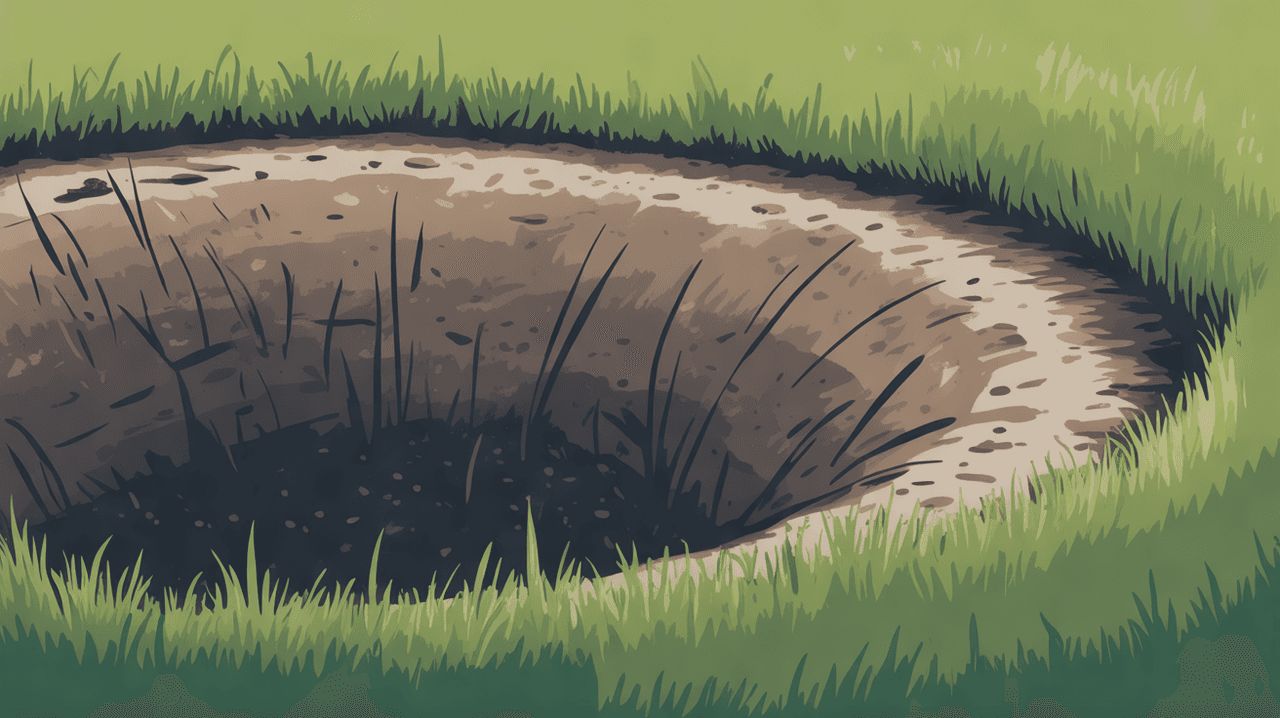
A fairy ring is a circle or arc in turf caused by fungi living in the soil. Most rings in home lawns only change the color of the grass and can be masked with fertilizer and water. The less common type kills grass and needs aeration and wetting agents, and only digging out the soil removes a ring for good.
- Soil fungi cause fairy rings by feeding on decaying organic matter in thatch.
- Type II rings, which grow dark green grass, are the most common type in lawns.
- Nitrogen fertilizer and irrigation mask Type II and III rings, which rarely cause lasting damage.
- Fungicides have largely failed, and excavating the soil is the way to eradicate a ring.
How to recognize a ring in your lawn
Rings show up as circular patches or arcs of lush dark green grass, and sometimes as brown or dead turf. They range from a few inches to 200 feet or more across and grow larger each year. Only k-state.edu reports this. Left untreated, a ring can spread about 6 to 12 inches per year. Only homesandgardens.com reports this.
Fungi in thatch and buried wood cause the rings
Many fungal species can form fairy rings. Only k-state.edu reports this. One count puts the number at 60 or more species, and more than 100 taxa of fungi have been observed forming rings. These fungi are basidiomycetes, members of the mushroom family. They colonize thatch and feed on decaying organic matter, and they do not directly attack turfgrass plants. Only k-state.edu reports this.
A study of Marasmius oreades rings found high levels of mycelium DNA at the ring rim and background levels in the center, so the mycelium itself is ring-shaped. Only sciencealert.com reports this. The results fit best with a "transient-escape" hypothesis, in which the fungus moves away from inhibitory conditions behind its advancing front. Scientists still do not know exactly why these fungi grow as rings instead of solid disks. Only sciencealert.com reports this.
Rings also change the soil they grow in. Soil under Leucocalocybe mongolica rings had higher electrical conductivity and available potassium than soil outside, and lower microbial diversity. Only datasetcatalog.nlm.nih.gov reports this. Neighboring rings do not overlap, because the fungi attack each other. Only whygoodnature.com reports this.
Three ring types and what each does to grass
| Type | Effect on grass | Why it happens |
|---|---|---|
| Type I | Kills or badly damages grass | Mycelium builds up and plugs soil pores, making the soil water repellent, so grass dies of drought stress |
| Type II | Dark green, lush growth | Fungi break down organic matter and release nitrogen and other nutrients that feed the grass |
| Type III | Mushroom rings, grass unaffected | Mushrooms typically appear after frequent or heavy rainfall |
Type II rings are the most common type seen in lawns. Type I is the least common.
How rare is a fairy ring?
Rings occur in all turf species and soil conditions throughout the United States. Only k-state.edu reports this. They are most visible in unirrigated, unfertilized areas with decomposing organic matter. They are also common where trees were removed and stumps, roots, lumber or wood chips remain buried in the soil.
Lawns low in nutrients, with dense thatch, or with sandy soil are more susceptible. Only homesandgardens.com reports this. Damp, shady conditions, poor drainage, fallen leaves and organic build-up encourage fungi and mushrooms to appear. Only eppingforestguardian.co.uk reports this. Warm, moist weather with intermittent summer drought stress makes ring symptoms worse. Only k-state.edu reports this.
What should you do if you see a fairy ring?
Start by working out which type you have. Type II and III rings rarely cause lasting damage, and the most effective approach is to mask the symptoms with adequate nitrogen fertilization and irrigation. Only k-state.edu reports this. Picking, brushing, raking or mowing the mushrooms is only cosmetic. Only homesandgardens.com reports this. It reduces spore spread but does not kill the fungus underneath.
Treating a Type I ring that kills grass
Deep core aeration and wetting agents, also called soil surfactants, help water penetrate the water-repellent soil and relieve symptoms. Only k-state.edu reports this. One extension service recommends a watering schedule of more frequent, shorter run times instead of a single weekly soak. The same service advises applying a wetting agent every 3 weeks to avoid wet-dry cycles in the ring. Only extension.oregonstate.edu reports this. Turf in a Type I ring may recover if the grass crowns are still alive. Only extension.oregonstate.edu reports this.
What kills the fungus for good?
Fungicide control has been largely unsuccessful. Only k-state.edu reports this. The amount of mycelium is large, and getting the fungicide to the fungus is difficult. Applying fungicide after aerating and watering may help eliminate a ring, but it may need repeating each spring for 2 to 3 years and may still fail. Only homesandgardens.com reports this.
Eradication requires excavating the affected soil to about 12 inches deep and at least 2 feet beyond the visible ring. Only k-state.edu reports this. Replace it with fresh soil, then reseed or sod. Mixing the soil may also help different fungi kill each other off.
Routine lawn care keeps rings in check
Proper watering and fertilization help keep fairy rings at bay. Only homesandgardens.com reports this. So do soil testing and dethatching or aeration to limit thatch. Rings cannot be prevented in an established lawn. If you are putting in a new lawn, removing the trees and most of their roots first helps prevent rings from forming. Only whygoodnature.com reports this.
Sources
- Fairy Ring | K-State | Kansas State Universityk-state.edu
- Fairy rings on lawns: what are they and how to combat them | Homes and Gardenshomesandgardens.com
- Fairy Ringwhygoodnature.com
- Fairy rings in my lawn? | OSU Extension Serviceextension.oregonstate.edu
- We May Finally Know Why Mysterious Mushroom Fairy Rings Grow in Circles : ScienceAlertsciencealert.com · single source
- Table_1_Soil Microbes Drive the Flourishing Growth of Plants From Leucocalocybe mongolica Fairy Ring.DOCX - Figshare | NLM Dataset Catalogdatasetcatalog.nlm.nih.gov · official · single source
- Why mushrooms are suddenly growing on your lawn this October | Epping Forest Guardianeppingforestguardian.co.uk · single source
Generated with sources · reviewed by a human: yes · Approved by mariofilk, 28 Oct 2026 · Sourcing policy