Leatherjackets in Lawns: How to Spot Crane Fly Larvae and Limit the Damage
Identify leatherjackets, count them against treatment thresholds, and time drainage work, nematodes and repairs to the right window.
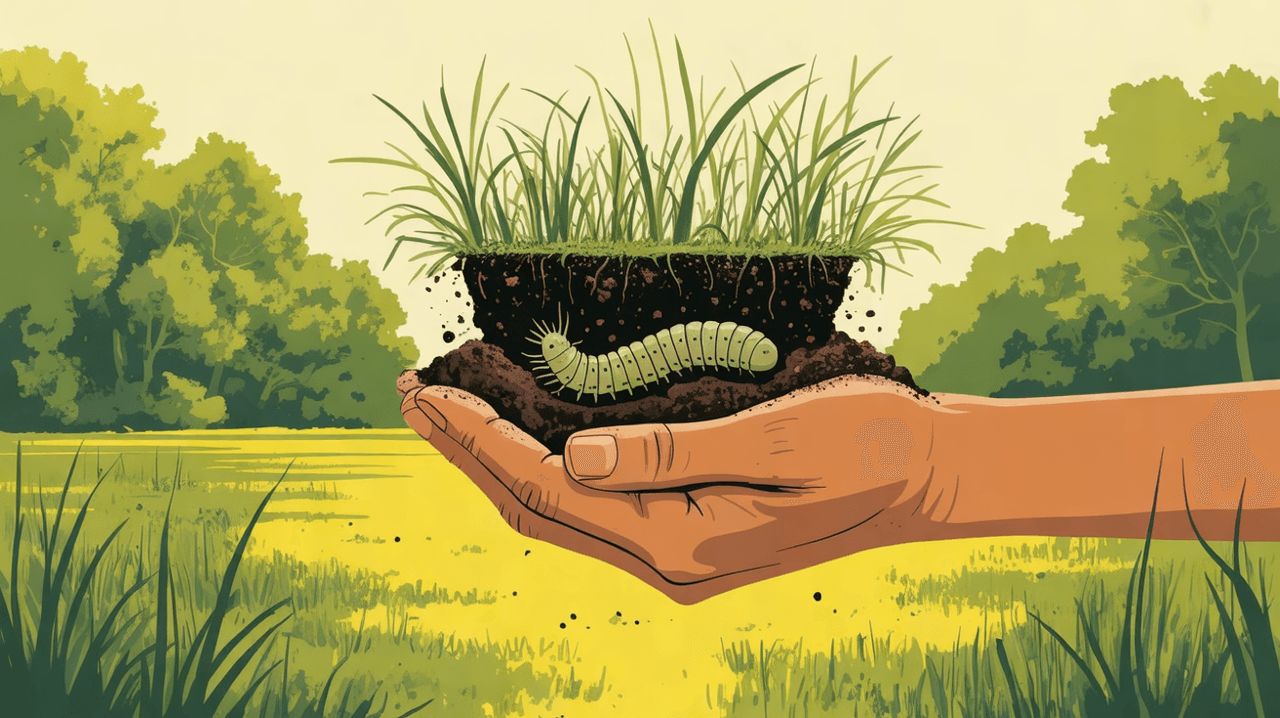
Leatherjackets are the larvae of crane flies, or daddy-longlegs, and they feed on the roots, crowns and stem bases of lawn grasses. Only a few crane fly species harm turf. To protect a lawn, confirm the grubs are present, count them, and act in the right window. Most crane flies do no damage at all: many larvae feed on decaying organic matter and help recycle nutrients.
Which crane flies matter
The main lawn-damaging leatherjackets are Tipula paludosa and Tipula oleracea. Adults emerge mainly from August to October and lay eggs in turf or soil. How many eggs one female lays is disputed. Green Gardener, Bugknow and Garden Ninja each put the amount at up to about 300.
The yearly schedule
- Late summer to early autumn: adults emerge and lay eggs. Dry soil at this stage can cause many eggs to fail to hatch.
- Within a couple of weeks: eggs hatch, and the young larvae feed on roots through autumn.
- Winter: larvae overwinter while still small. After a cold winter they may not reach damaging size until mid-summer. After a mild one they can get there by late winter.
- Autumn and late winter to spring: damage is typically worst in these periods, when larvae are large and feeding.
- Late spring or summer: larvae pupate. Emerging adults often leave the pupal case partly sticking out of the lawn surface.
Because dry soil kills eggs, a heavy flight of adults does not necessarily mean many leatherjackets the next year. The adults themselves cannot bite or sting and do not transmit human disease. They need no treatment, since by the time you see them the eggs are already laid.
Identifying the grub
Leatherjackets are tough, leathery-skinned grubs that reach about 4 cm (roughly 1.6 inches) when fully grown. The grub most often confused with them is the chafer grub. Shape and legs tell the two apart.
| Feature | Leatherjacket | Chafer grub |
|---|---|---|
| Color | Grey-brown to blackish | Creamy white |
| Head | No distinct head | Orange-brown head |
| Legs | None | Three pairs |
| Posture | Stays straight | Curls into a C shape |
Signs and how to confirm
- Thin, yellow or brown patches
- Grass that pulls up easily or peels back like carpet because the roots are eaten
- Birds, especially starlings, or other animals digging at the lawn
Animal digging is a symptom of grubs, not the cause. Treating the grubs stops it. Deterring the animals leaves the grubs in place.
Confirming larvae
Brown patches alone are not proof, because drought, disease and other grubs produce similar patches. Use one of these checks before you decide on treatment:
- Lay black plastic, sacking or carpet on damp turf overnight. Leatherjackets come to the surface, where you can identify and count them.
- Pour soapy water over a suspect patch to flush larvae out.
- Cut out a square-foot section of turf and count the larvae in the top 1–2 inches.
When counts justify treatment
Published thresholds use different units and different cutoffs. Compare your count against both rules below.
| Rule | Amount | Meaning |
|---|---|---|
| Per-square-foot rule | About 25 larvae per sq ft | Treatment generally warranted above this |
| UK rule | More than 5 per sq m | Worth treating |
| UK rule | 20 or more per sq m | Severe |
| UK rule | Over 100 per sq m | Kills large areas of turf |
Healthy lawns that are well irrigated and fertilized often tolerate more than 25 larvae per square foot. Stressed turf can show damage at lower counts. Natural predators also help. Starlings, robins and other birds, along with ground beetles and predatory insects, can reduce leatherjacket numbers, sometimes below damaging levels.
Cultural measures first
Letting turf dry out makes conditions less favorable for eggs and newly hatched larvae. The rest of the cultural work order targets wet, stressed turf:
- Improve drainage and aerate the lawn.
- Avoid overwatering, especially in late summer and autumn.
- Remove excess thatch.
- Mow and feed the lawn so it outgrows feeding damage.
Nematodes and the early-autumn window
The nematode Steinernema feltiae parasitizes leatherjackets. Apply it to moist, warm soil in early autumn, shortly after the eggs hatch, when the larvae are small and near the surface. Applications later in the year give weaker control.
Recommended minimum soil temperatures differ. Green Gardener and Garden Ninja give roughly 10–12°C (about 50–54°F) or above, and one of the two sets the floor at about 12°C. Both say to keep the soil moist and to water the nematodes in after application. Expected results also vary: one extension estimate is up to about 50% reduction, while a UK gardening blog claims 80–90% control from a correctly timed application.
- Leatherjacket nematodes are safe for children, pets and wildlife.
- Fertilizers and weedkillers do not affect them.
- They are perishable and must be kept refrigerated.
- Once mixed, use them promptly.
Insecticides as a last resort
Insecticides come after cultural measures. They work best against small larvae in early autumn, winter or early spring, and a spring application will not undo damage already done. Products named for this use include chlorantraniliprole, carbaryl, clothianidin and imidacloprid. In the UK, imidacloprid- and chlorpyrifos-based lawn insecticides have been withdrawn from amateur use, and acelepryn is restricted to licensed professionals. Only gardenninja.co.uk reports this.†
Do not treat in the fall if you made an effective spring treatment, because two applications per year are unnecessary. Monitor in February or March. If you missed a spring treatment, monitor from mid-November to December instead.
Recovery
Grass damaged by leatherjackets usually recovers once the larvae stop feeding, though weeds may invade weakened areas. Overseed thinned patches and feed the lawn to speed recovery. The steps run in a fixed order: confirm the larvae, count them against a threshold, correct drainage and watering, then time any nematodes for early autumn.
Sources
- Leatherjackets | RHS Advicerhs.org.uk
- What's eating my lawn - treating Leatherjackets and Chafer Grubs with nematodes. - Green Gardenergreengardener.co.uk
- Crane Fly Larvae — Identifying Leatherjackets in Your Soil and Lawn - BugKnowbugknow.com
- How to Get Rid of Crane Flies — and When Not To | Vinxvinxpestcontrol.com
- How to Get Leather Jackets Out of Lawns: Natural Methods That Actually Workgardenninja.co.uk
- Lawn and Turf: European Crane Fly | Hortsense | Washington State Universityhortsense.cahnrs.wsu.edu · single source
- Crane Fly Larvae in Turf | NC State Extension Publicationscontent.ces.ncsu.edu · single source
Generated with sources · reviewed by a human: yes · Approved by mariofilk, 16 Oct 2026 · Sourcing policy