How do you spot and stop fall armyworms in a lawn?
Use the warning signs, a soap-flush count and a treatment threshold to decide whether to spray, then help damaged turf grow back.
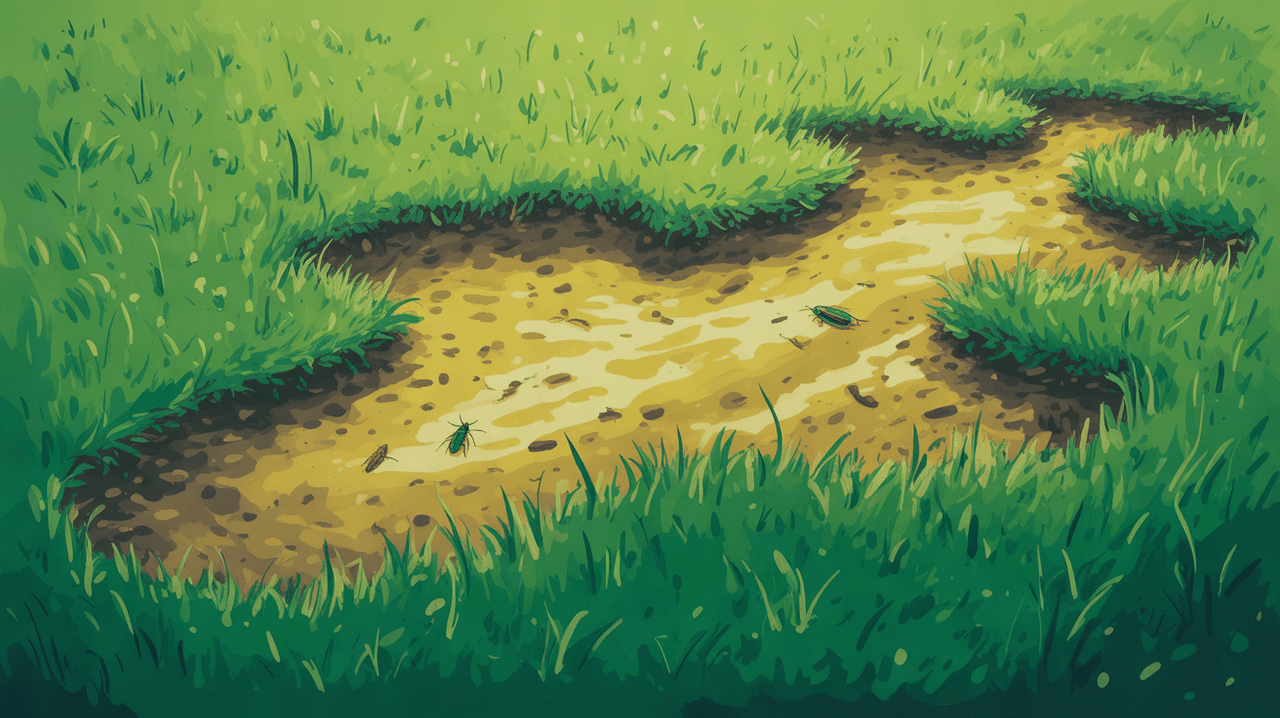
Fall armyworm caterpillars can completely destroy a lawn, and huge numbers can build up from just a few moths. Only pubs.ext.vt.edu reports this. In Virginia, pressure typically peaks from mid-August to mid-September. Only pubs.ext.vt.edu reports this. A homeowner who finds the caterpillars while they are small, counts them and treats only when the count is high has the best chance of keeping the turf alive.
- Fall armyworm cannot overwinter in Virginia, so migrating moths bring it north each year.
- A pale inverted Y on a dark head identifies the caterpillar.
- More than about 9 caterpillars per square yard may warrant treatment. Only ask.extension.org reports this.
- Insecticides work far better on caterpillars under about 3/4 inch long.
Why outbreaks arrive in late summer
Fall armyworm cannot survive the winter in Virginia. Only pubs.ext.vt.edu reports this. Each year it arrives again with moths flying north from the south. The moths are strong fliers, and wind currents, storms, hurricanes and tropical storms can carry very large numbers deep into the interior of the continent. Only turf.purdue.edu reports this.
That migration gives turf managers some warning. In the mid-Atlantic, they watch for reports of activity in North Carolina as a sign that pressure is heading north. Only pubs.ext.vt.edu reports this. Matthew McKernan of Kansas State says that when moths show up in traps, eggs will be laid and caterpillars will appear in lawns within weeks. Only kwch.com reports this.
Weather sets the size of the outbreak. Above-average rain in August and September favors egg survival, and late-summer rains that produce lush growth come with large numbers of larvae. Only citybugs.tamu.edu reports this. Outbreaks often follow early fall rains.
How can you tell armyworm damage from drought?
Look for the caterpillars themselves, ragged or jagged feeding on the leaf blades, and caterpillar droppings on the ground. Only kwch.com reports this. Drought leaves none of these. The caterpillar has a pale inverted Y on its dark head capsule and stripes along its body.
Early feeding leaves "window pane" clearings in the leaves. Damaged areas then look off-color and turn brown as whole leaves are eaten. Only citybugs.tamu.edu reports this. In large numbers the larvae strip the foliage and move across the lawn together, so the turf seems to be moving, which is where the name armyworm comes from.
Other clues help. More birds feeding in a lawn often means fall armyworms are present. Only pubs.ext.vt.edu reports this. Moths lay egg masses on vertical objects such as building walls and golf flags, and scouting for those clusters can reveal an infestation early. Only turf.purdue.edu reports this. Eggs also sit in clusters of 50 or more at the base of host plants under grayish scales, where they are seldom seen. Only citybugs.tamu.edu reports this.
Eggs and larvae can travel to new areas on grass sod. Only citybugs.tamu.edu reports this. A single female can lay up to 10 egg masses of 100 to 200 eggs each, so a new lawn can be overrun quickly.
How many caterpillars justify treatment?
A soap flush brings hidden caterpillars to the surface. The Maryland method mixes 3 to 4 tablespoons of dish soap in 2 gallons of water, pours it over 1 square yard of turf, and counts the caterpillars that appear over 10 minutes. Only ask.extension.org reports this. More than about 9 per square yard may warrant treatment.
Insecticides are usually not needed when damage is minimal. Treatment makes sense when many caterpillars are present and damage is becoming excessive. In Virginia, fall armyworms are rarely a serious problem on warm-season grasses, and chemical treatment is typically unnecessary if enough season remains for recovery, though late-season outbreaks and damage to newly installed sod are a concern. Only pubs.ext.vt.edu reports this.
Timing decides the result. The first three larval stages eat little, while the last two consume about 85% of all the foliage eaten. Only citybugs.tamu.edu reports this. Caterpillars under about 3/4 inch are much easier to control, and large larvae are difficult to kill with any insecticide. Only ask.extension.org reports this.
Choosing and applying an insecticide
Many active ingredients are registered for fall armyworm in turfgrass, including pyrethroids, carbaryl, diamides and indoxacarb. Only turf.purdue.edu reports this. Spinosad, neonicotinoids, organophosphates and the nematode Steinernema carpocapsae are also on the list. Pyrethroids gave very good control in Virginia Tech trials and are among the cheaper options. Only pubs.ext.vt.edu reports this.
For small caterpillars, Bacillus thuringiensis, spinosad and Acelepryn (chlorantraniliprole) all work. Only ask.extension.org reports this. Bt is selective, but its residue lasts only 1 to 2 days on turf. Halofenozide works on small caterpillars only.
Liquid sprays are generally preferable to granules because they cover better and act faster, while granules need rain or irrigation to work. Only turf.purdue.edu reports this. Mowing just before an application can improve penetration. Mature larvae burrow into the soil to pupate, and by then the lawn damage is done, so treatment should target larvae that are still feeding. Only lawncareguides.com reports this.
Natural enemies and weather usually keep outbreaks small. These enemies include parasitic wasps and flies, ground beetles, birds, skunks, rodents, viruses and fungi. Only citybugs.tamu.edu reports this.
How do you help the lawn recover?
Recovery depends on the crown and growing point. Chewed-off blades leave crowns open to heat and drought stress, and irrigation helps the turf recover as long as those crowns are healthy. Only ask.extension.org reports this. Water if the soil is dry, and do not mow turf that is not growing.
Avoid raking, core cultivating or slit seeding while the soil is hot. Only turf.purdue.edu reports this. Right after an outbreak, use very light nitrogen, under 0.5 lb N per 1,000 square feet, or none. Overseeding and fertilizing cool-season lawns in early September is advised.
On cool-season grasses with only minimal thinning, standard fall fertility can repair the damage. Only pubs.ext.vt.edu reports this. Extreme damage may call for fall renovation or reseeding. No turfgrass cultivars resist fall armyworm, so switching varieties will not prevent a repeat.
Keep watching for the next generation
Fall armyworm can produce two to three generations a year in Virginia and three to four in warm climates. Only pubs.ext.vt.edu reports this. In warm conditions, the cycle from egg to adult takes about 28 days. Adults that emerge from the soil mate and start the cycle again.
Keep checking the lawn in the weeks after an outbreak, because another generation of larvae may follow. That generation is unlikely to return to the same damaged stands, since the adults disperse to greener turf nearby. Only turf.purdue.edu reports this.
Sources
- Managing Fall Armyworms on Lawnspubs.ext.vt.edu
- Fall Armyworms: What next?turf.purdue.edu · single source
- Armyworms in Turfgrass - Insects in the Citycitybugs.tamu.edu
- Kansas lawn owners warned to watch for fall armyworm damage this seasonkwch.com · single source
- Fall armyworms - Ask Extensionask.extension.org · single source
- Fall Armyworm Control: Identification & Emergency Treatment Guide (2026)lawncareguides.com · single source
Generated with sources · reviewed by a human: yes · Approved by mariofilk, 26 Oct 2026 · Sourcing policy