How Do You Find, Count and Time Control of Chinch Bugs in a Lawn?
Use a can test, per-square-foot thresholds and the seasonal window to decide whether a chinch bug infestation needs insecticide and when to apply it.
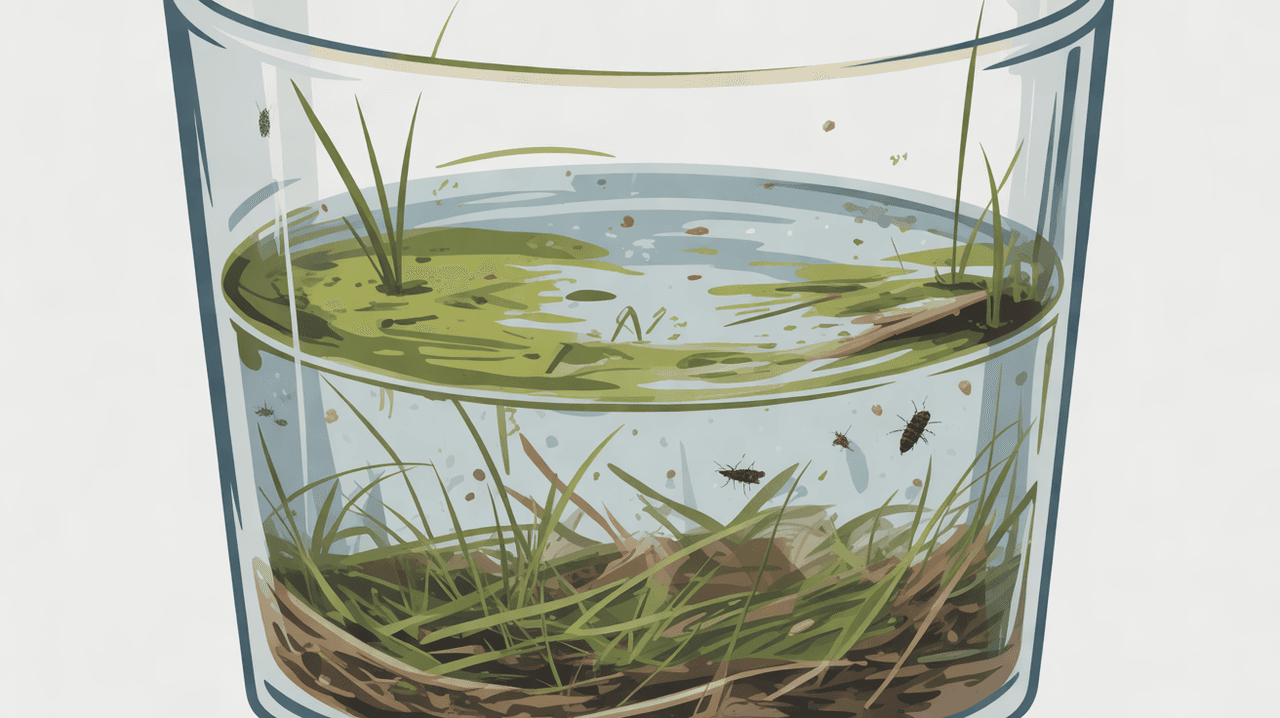
Chinch bugs damage lawns by sucking sap from grass, and the damage is easy to mistake for drought. A lawn owner can confirm them with a simple flotation test, count them against a threshold and treat only when the numbers justify it. Timing matters because late-season sprays do little and dead grass does not come back.
- Damage that keeps spreading despite good watering points to chinch bugs, not drought.
- Look at the edge where yellow grass meets green, in the thatch and at the base of the turf.
- Treatment may be warranted at two to three bugs per flotation test area.
- Insecticide applied late in the season is ineffective.
What does chinch bug damage look like?
Damage shows up as expanding, irregular yellow or brown patches. It often starts in hot, sunny spots such as along sidewalks and driveways, and it gets worse in hot, dry weather. Only mytexas.ag.tamu.edu reports this.
The patches resemble drought stress, but they behave differently. Drought-stressed turf recovers with irrigation. Grass under chinch bug attack keeps declining even with adequate watering. Only getsunday.com reports this.
The reason is in how the insects feed. Chinch bugs use piercing-sucking mouthparts and inject a toxic saliva that interferes with water and nutrient movement. Only hort.extension.wisc.edu reports this. Plants can keep wilting even after the bugs are controlled.
Where should you look for chinch bugs?
Search at the edge of the damaged area, where yellowing grass meets healthy green grass. The bugs live in the thatch and at the base of the turf, not in the center of a dead patch.
If a lawn is prone to chinch bugs, inspect it weekly in spring, summer and fall. Only mytexas.ag.tamu.edu reports this. Focus on sunny areas and the strips along sidewalks and driveways.
Before treating, rule out big-eyed bugs. These beneficial predators of chinch bugs are often mistaken for them. They have large protruding eyes, a head as wide as or wider than the thorax, and they lack the black-and-white wings of a chinch bug. Only mytexas.ag.tamu.edu reports this.
How do you run a flotation test?
The flotation, or can, test brings nymphs and adults to the surface where you can count them. Only mytexas.ag.tamu.edu reports this. It takes only a can with both ends open and some water.
- Push the open-ended can into the turf at the edge of the damaged area.
- Fill the can with water.
- Wait about 5 to 10 minutes for nymphs and adults to float up.
- Count the bugs and record the can size.
Can counts need scaling before you compare them with per-square-foot figures. Roughly five 6-inch coffee cans equal about one square foot. Only lawncarejournal.app reports this.
How many chinch bugs justify treatment?
Thresholds are given either per can sample or per square foot. The per-sample figures are the easiest to apply directly in the yard.
| Measure | Threshold |
|---|---|
| Wisconsin guidance, per flotation test area | Average of 2–3 bugs may warrant treatment |
| 4-inch-diameter can | More than about 2 bugs per sample |
| 6-inch can | More than 4–5 bugs per sample |
| Common chinch bug, per square foot | About 5–10 may injure turf |
| General figure, per square foot | 15–20 bugs |
For the southern chinch bug on St. Augustinegrass, Texas A&M AgriLife Extension puts the point at which damage appears or grass dies at roughly 20–25 bugs per square foot. Sources disagree on this: mytexas.ag.tamu.edu, extension.msstate.edu. Mississippi State University Extension also cites roughly 20–25 per square foot for the same pest and grass.
The rule behind all of these numbers is the same. Apply insecticide only when chinch bugs are abundant enough to cause damage, not routinely or preventively. Only mytexas.ag.tamu.edu reports this. Limit treatment to the affected areas plus a few feet beyond.
When is the treatment window?
The schedule depends on how many generations the bugs complete. Southern chinch bugs have three to five overlapping generations per year. Only mytexas.ag.tamu.edu reports this. In northern and mid-latitude states such as Indiana, Wisconsin, Maryland and Kansas there are two, with a possible single generation in the coolest parts of Wisconsin. Only extension.entm.purdue.edu reports this.
Adults overwinter in thatch, plant debris and around foundations, and they become active in spring at about 70°F. Only hort.extension.wisc.edu reports this. In Wisconsin, damage can appear from late June until the first frost and is most apparent in late summer and early fall. Only hort.extension.wisc.edu reports this. In Maryland, symptoms generally occur June through September, and peak damage is cited as July through August.
Summer is the best time to treat, when immature bugs can be reduced before they reproduce. Only organicplantcarellc.com reports this. Heavy infestations may need a second treatment 2 to 3 weeks later. Spring treatment may be unnecessary if the weather is cool and wet.
Late-season applications are ineffective, and in Maryland they are generally not recommended past mid-August. Only extension.umd.edu reports this. Where chinch bugs persist for several consecutive years, Wisconsin guidance notes that a single early May application may give season-long control. Only hort.extension.wisc.edu reports this.
What should you expect after spraying?
Insecticides take 2 to 3 days to kill above-ground insects. Only extension.entm.purdue.edu reports this. Killing the pest only prevents further damage. It does not restore grass that has already died.
Advice on watering in a liquid insecticide differs. One recommendation is ⅛ to ¼ inch of irrigation after spraying to wash the product into the thatch, with watering the day before. Only extension.msstate.edu reports this. Another calls for about ½ inch, and a third advises against irrigation after a liquid application.
Product choice matters for southern chinch bugs. There are reports of bifenthrin resistance in this species, and clothianidin products control chinch bugs that are resistant to pyrethroids. Only mytexas.ag.tamu.edu reports this.
Thatch and fertilizer habits set up next year's outbreak
Thatch harbors chinch bugs and can bind insecticides before they reach the bugs. Reducing it discourages outbreaks: remove buildup over about ½ inch, or vertical mow when thatch is over 1 inch. Only mytexas.ag.tamu.edu reports this.
Over-fertilizing with nitrogen increases chinch bug problems and adds to thatch. Only mytexas.ag.tamu.edu reports this. A lighter nitrogen amount works against both.
After any treatment, check the site at 5 and 12 days to see whether the infestation is under control. Only mytexas.ag.tamu.edu reports this. Because a second generation can follow, re-scout at 7 to 14 days and return to weekly inspections through fall.
Sources
- Chinch Bug Management in Lawnsmytexas.ag.tamu.edu
- Southern Chinch Bugs Vol. 9, No. 17 | Mississippi State University Extension Serviceextension.msstate.edu
- Chinch Bugs: Identify & Prevent Lawn Damagegetsunday.com · single source
- Coffee can test for chinch bugs | Lawn Care Journallawncarejournal.app
- Turfgrass Disorder: Chinch Bug (A3237)hort.extension.wisc.edu
- TURFGRASS INSECTS - E-61-Wextension.entm.purdue.edu · single source
- Insects and Mites in Home Lawns | University of Maryland Extensionextension.umd.edu · single source
- Chinch Bugs in Lawns: Signs, Treatment & Prevention | Organic Plant Care LLC | Organic Lawn & Plant Health Service in Hunterdon, Morris, Somerset & Union Counties, NJ and Bucks County, PAorganicplantcarellc.com · single source
Generated with sources · reviewed by a human: yes · Approved by mariofilk, 23 Oct 2026 · Sourcing policy