Chinch Bugs in St. Augustine Lawns: Signs, Checks and Treatment Timing
Learn what southern chinch bug damage looks like, where in the turf to inspect, and how cultivar choice shapes control over the long term.
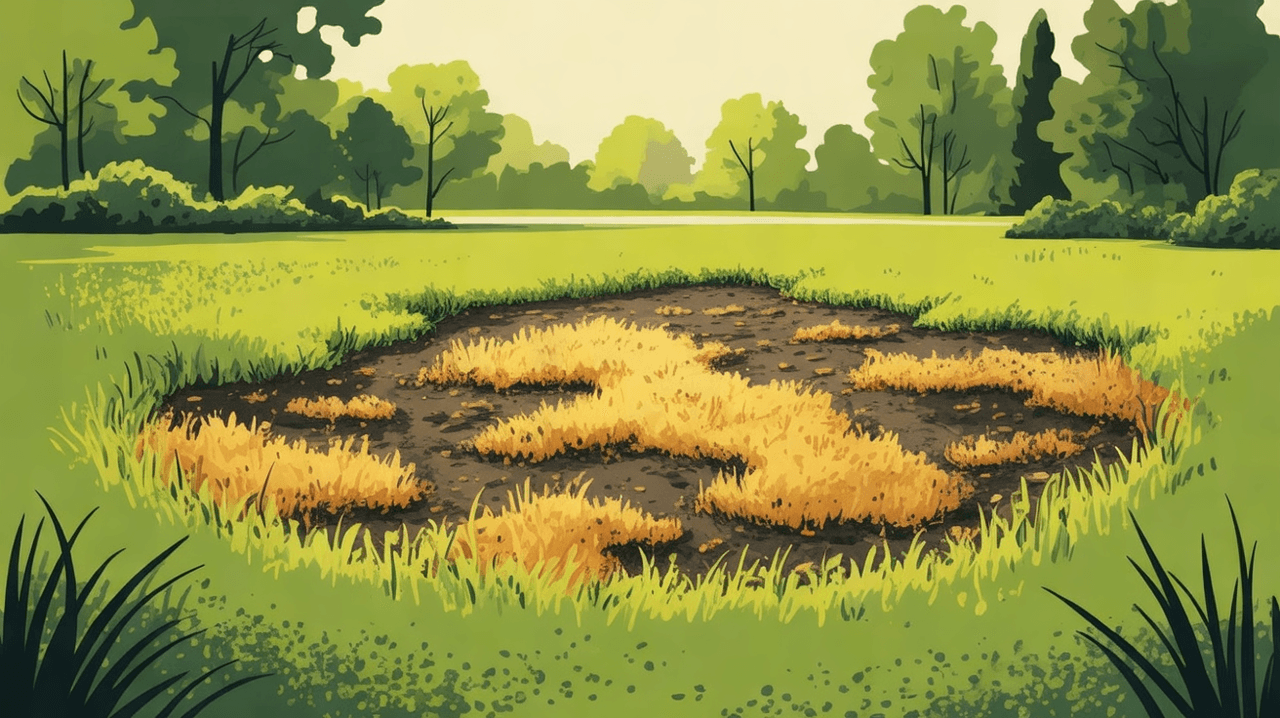
The southern chinch bug (Blissus insularis) is the most serious and destructive insect pest of St. Augustinegrass. Anyone caring for this turf should rule it out first when grass slows, yellows and dies back in patches. A sound response rests on two things: reading the damage correctly and choosing grass that stands up to the insect.
How the damage develops
Southern chinch bugs feed on the grass phloem. Only pmc.ncbi.nlm.nih.gov reports this. That feeding diminishes grass growth, turns blades yellow and then brown, and eventually kills patches of grass.
The sequence is useful in practice. Slowed growth and yellowing come before brown blades, and brown blades come before dead patches. A lawn that is only yellowing is at an earlier stage of injury than one where whole patches have already died.
Reading the stage of damage is the first step in deciding why now is the time to look closer. Yellowing turf is the signal to inspect, not a reason to wait for brown patches.
Where to check the grass
Southern chinch bug adults and nymphs aggregate to feed at the base of the grass. Only pubmed.ncbi.nlm.nih.gov reports this. Inspection therefore belongs low in the turf, close to where the plant meets the soil, rather than on the blade tips where the yellowing is easiest to see.
Within the plant, the axillary shoot is the preferred feeding tissue in St. Only pubmed.ncbi.nlm.nih.gov reports this. Augustinegrass. Part the blades and look down at the base and at the axillary shoots. Because both adults and nymphs gather in groups to feed, you are looking for clusters rather than single insects.
A simple rule follows from this. Check the base of the grass in the yellowing areas, look specifically at the axillary shoots, and note whether you find adults, nymphs or both.
Why cultivar choice matters
Resistant grass has long been part of chinch bug management. The 'Floratam' St. Augustinegrass cultivar, released in 1973, effectively controlled the southern chinch bug. Only pubmed.ncbi.nlm.nih.gov reports this. Populations in Florida and Texas have now overcome that resistance, by mechanisms that remain unknown.
Planting Floratam on the expectation that it will hold off chinch bugs is no longer a safe rule in those states. The cultivar's history also shows that resistance in a grass is not permanent.
Resistance to the southern chinch bug has been identified in the cultivars 'FX-10' and 'Captiva'. Only pubmed.ncbi.nlm.nih.gov reports this. In both, thick-walled sclerenchyma cells around the vascular bundle appear to contribute to resistance, possibly by reducing how well the insect's stylet penetrates to the vascular tissue. Only pubmed.ncbi.nlm.nih.gov reports this. Total lignin content was not correlated with resistance.
The distinction matters. What seems to count is the structure of the tissue around the vascular bundle, not the overall amount of lignin in the plant.
Evidence from choice tests
In choice tests, adult chinch bugs were found significantly more often on susceptible lines (Floratam, Bitter Blue and Palmetto) than on the resistant lines FX-10 and NUF-76. Only pubmed.ncbi.nlm.nih.gov reports this. Adults on Floratam produced 11 times more eggs than on FX-10 and 5 times more than on NUF-76.
Those egg counts point to a difference that goes beyond where adults choose to settle. A resistant line both draws fewer adults and supports far lower egg production by the adults that do feed on it.
| Cultivar or line | Response to southern chinch bug |
|---|---|
| Floratam | Effective control after its 1973 release; resistance now overcome in Florida and Texas; susceptible in choice tests |
| Bitter Blue | Susceptible in choice tests |
| Palmetto | Susceptible in choice tests |
| FX-10 | Resistance identified; fewer adults and fewer eggs than on Floratam |
| Captiva | Resistance identified |
| NUF-76 | Resistant in choice tests; fewer adults and fewer eggs than on Floratam |
Limits of resistant grass
Few cultivars resistant to the southern chinch bug are available. Only pubmed.ncbi.nlm.nih.gov reports this. Their efficacy, climatic adaptability and aesthetic traits vary.
In practice, a resistant cultivar is a trade-off rather than a single answer. One that performs well against chinch bugs may not suit a given climate, or may not give the look a homeowner or site manager expects. The Floratam experience adds a further caution: resistance that works today may not hold over time.
Timing your response
The window for action opens with the earliest signs. Diminished growth and yellowing come before brown blades and dead patches, so checking the base of the grass at the yellowing stage gives the clearest view of whether chinch bugs are present while the turf is still alive.
Longer-term decisions run on a different schedule. When a lawn is being renovated or replanted, that is the point to weigh cultivar resistance against climate fit and appearance. It is also the point to remember that Floratam no longer offers the protection it once did in Florida and Texas.
A practical work order brings these steps together. Watch for slowed growth and yellowing, inspect the base of the grass and the axillary shoots for clustered adults and nymphs, and treat cultivar choice as part of any replanting plan.
Putting it together
The southern chinch bug is the most serious insect threat to St. Augustinegrass because its phloem feeding moves turf from slowed growth to dead patches. Knowing that adults and nymphs gather at the base of the grass, and favor the axillary shoot, tells you exactly where to look.
Resistant cultivars such as FX-10 and Captiva offer a structural defense, and choice tests show far fewer adults and eggs on resistant lines than on Floratam. Options remain limited and vary in performance, so early inspection and careful cultivar selection both belong in any plan for this pest.
Sources
- Role of leaf sheath lignification and anatomy in resistance against southern chinch bug (Hemiptera: Blissidae) in St. Augustinegrass - PubMedpubmed.ncbi.nlm.nih.gov · official
- Culturing and Characterization of Gut Symbiont Burkholderia spp. from the Southern Chinch Bug, Blissus insularis (Hemiptera: Blissidae) - PMCpmc.ncbi.nlm.nih.gov · official
- Pest categorisation of Blissus insularis - PubMedpubmed.ncbi.nlm.nih.gov · official
- St. Augustine grass germplasm resistant to Blissus insularis (Hemiptera: Blissidae) - PubMedpubmed.ncbi.nlm.nih.gov · official
- Oxidative responses of St. Augustinegrasses to feeding of southern chinch bug, Blissus insularis Barber - PubMedpubmed.ncbi.nlm.nih.gov · official
- Categories of resistance in St. Augustinegrass lines to southern chinch bug (Hemiptera: Blissidae) - PubMedpubmed.ncbi.nlm.nih.gov · official
Generated with sources · reviewed by a human: yes · Approved by mariofilk, 19 Oct 2026 · Sourcing policy