Identifying Common Lawn Diseases: Brown Patch, Dollar Spot and Rust
Use this guide to see why lawn disease is hard to name from looks alone, and which methods and pathogen names support a sound diagnosis.
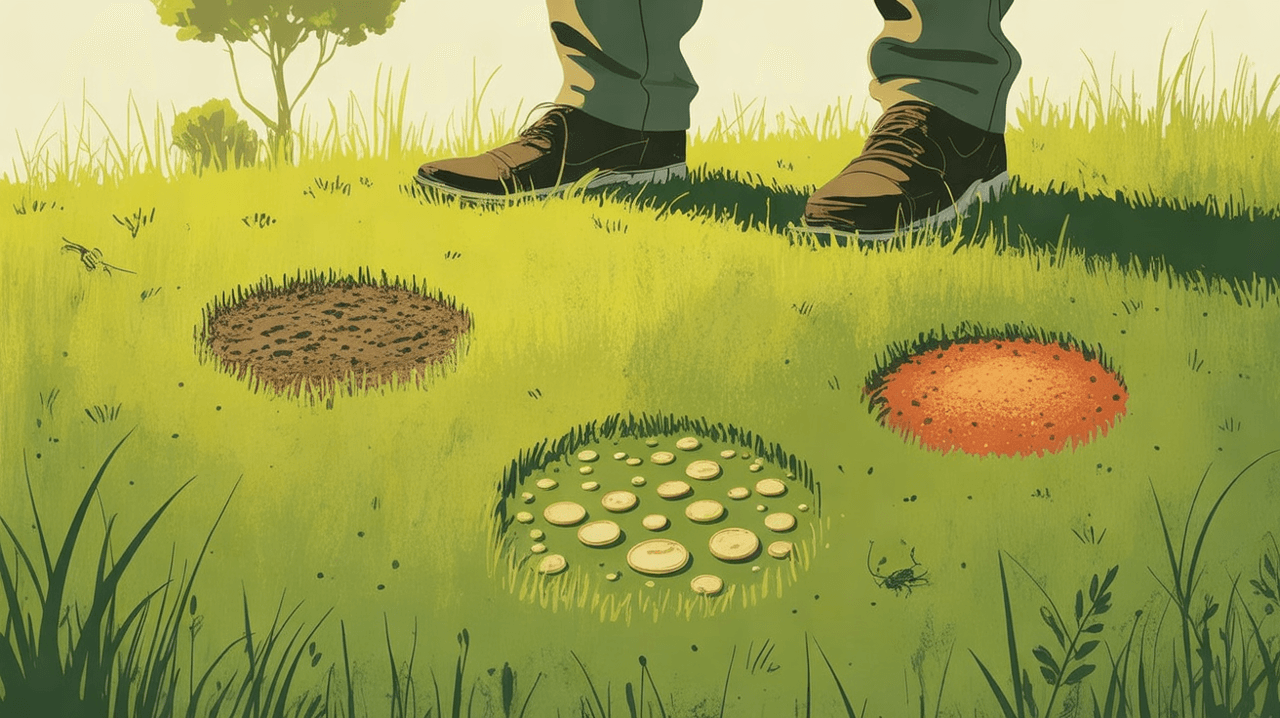
Many turfgrass diseases look alike, so naming the pathogen behind a damaged lawn is difficult. That difficulty has a cost. An incorrect diagnosis delays treatment and leads to excessive use of chemicals. Only pubmed.ncbi.nlm.nih.gov reports this.
Brown patch, dollar spot and rust are names that lawn owners and turf managers often reach for when grass starts to fail. The rule for each is the same: identify the cause before choosing a treatment. This article sets out why that rule matters and which diagnostic methods support it. It also gives the pathogen names linked to two common diseases.
Why symptoms alone are not enough
The central problem is overlap. Many turfgrass diseases have similar signs and symptoms, which makes it hard to diagnose the specific causal pathogen from what the eye can see. Only pubmed.ncbi.nlm.nih.gov reports this.
A patch of discolored or thinning grass can point toward more than one disease. Two lawns can show damage that looks the same to a casual observer and still have different causes. Without a firm diagnosis, any treatment plan rests on an assumption.
The cost of getting it wrong
An incorrect diagnosis has two direct consequences. The first is delay: treatment that fits the real cause starts later than it should. The second is excessive use of chemicals, since products applied against the wrong pathogen add to the total amount used without addressing the real problem.
Both consequences are reasons to treat diagnosis as the first step on any work order for a diseased lawn. Time spent confirming the cause is time that protects the treatment schedule and limits the amount of product applied.
How turfgrass pathogens are diagnosed
Diagnostic methods for turfgrass pathogens have developed in stages. The traditional methods came first, and newer techniques followed them.
- Identification by symptoms: reading the visible signs of disease in the grass.
- Identification by morphology: examining the physical form of the pathogen.
- Identification by microscopy: looking at the pathogen under magnification.
- Nucleic acid detection: identifying the pathogen from its genetic material.
- Onsite detection techniques: identifying the pathogen where the turf is growing.
The order matters for a practical reason. Symptoms come first in the sequence, but they are also where the overlap between diseases causes the most trouble. The later methods move away from visible signs and toward the pathogen itself.
Dollar spot and its causal agent
Dollar spot is one of the diseases in this article for which a specific causal agent can be named. Dollar spot of turfgrass is caused by Clarireedia spp. Only pubmed.ncbi.nlm.nih.gov reports this.
A second name also appears for the same disease. Sclerotinia homoeocarpa is identified as the causal agent of dollar spot disease. Only nature.com reports this. Readers comparing references on dollar spot should expect to see either name attached to it.
Rhizoctonia large patch
Rhizoctonia large patch of turfgrass is caused by Rhizoctonia solani. Only pubmed.ncbi.nlm.nih.gov reports this. The disease name itself carries the genus of the pathogen, which makes the link easy to remember.
As with dollar spot, knowing the causal agent turns a vague description of damaged grass into a specific diagnosis. That diagnosis is what a treatment decision should rest on.
Pathogens at a glance
The table below lists the disease and pathogen pairs covered above. Dollar spot appears twice because two pathogen names are given for it.
| Disease | Causal agent |
|---|---|
| Dollar spot | Clarireedia spp. |
| Dollar spot | Sclerotinia homoeocarpa |
| Rhizoctonia large patch | Rhizoctonia solani |
Brown patch and rust
Brown patch and rust belong in the same discussion because the same rule applies to them. Their visible signs can resemble those of other turfgrass diseases, so appearance alone is a weak basis for a diagnosis. The methods listed above, from symptoms through to nucleic acid and onsite detection, are the route to a firm identification. Only pubmed.ncbi.nlm.nih.gov reports this.
Putting diagnosis first
The practical lesson is simple. Similar symptoms make lawn diseases hard to tell apart, and a wrong call delays treatment while driving up chemical use.
Build diagnosis into the schedule before any product goes down. Where symptoms leave doubt, move along the sequence of methods toward ones that identify the pathogen directly. For dollar spot, expect the cause to be given as Clarireedia spp. or as Sclerotinia homoeocarpa. For Rhizoctonia large patch, the cause is Rhizoctonia solani.
Sources
- Turfgrass Disease Diagnosis: Past, Present, and Future - PubMedpubmed.ncbi.nlm.nih.gov · official · single source
- The Epichloë festucae antifungal protein has activity against the plant pathogen Sclerotinia homoeocarpa, the causal agent of dollar spot disease | Scientific Reportsnature.com · single source
Generated with sources · reviewed by a human: yes · Approved by mariofilk, 13 Oct 2026 · Sourcing policy