How do you spot and repair vole runways after snow melt?
Tell vole runways from mole tunnels and snow mold, then rake, seed and protect your lawn and young trees on a sensible spring schedule.
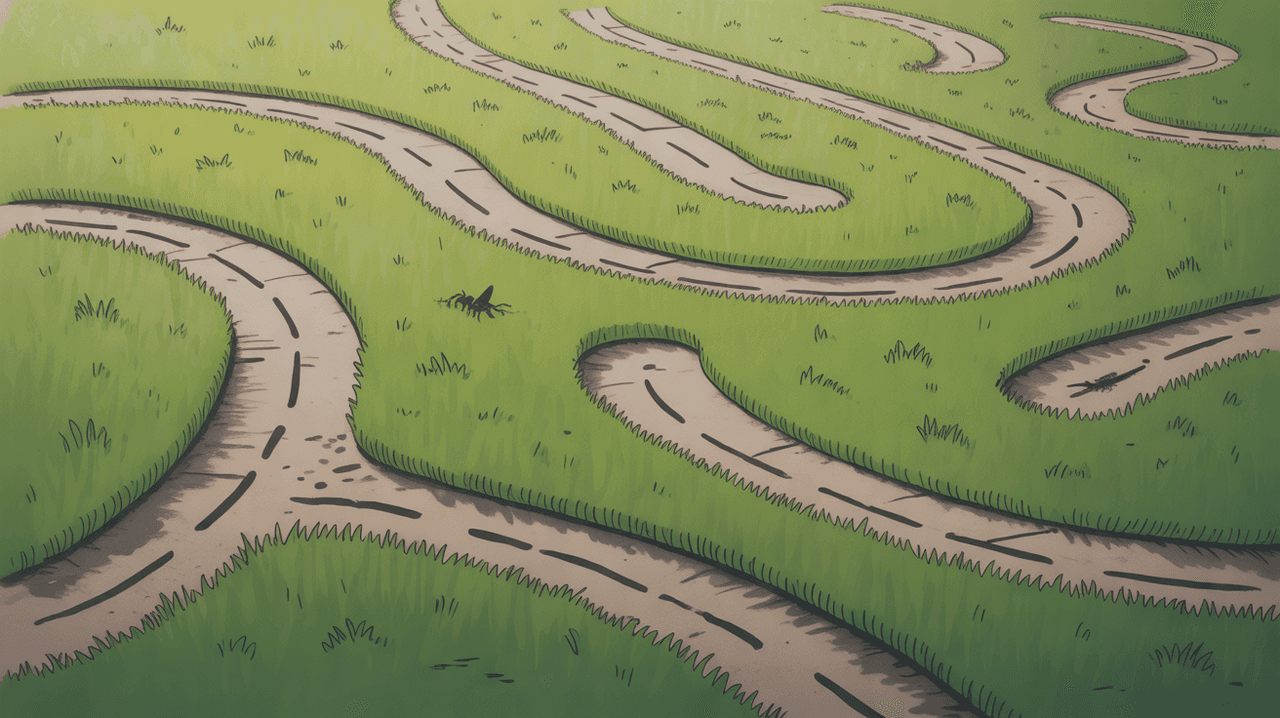
Winding, clipped paths across a lawn after the snow melts are usually the work of voles. These small rodents travel beneath or within the snowpack and clip grass as they go. The runway network shows up only once the snow is gone. Most light damage grows back, but some patches need raking and seed.
- Vole runways are winding surface paths about 1–2 inches wide with grass clipped close to the ground.
- Voles leave no large soil mounds, which separates their damage from mole activity.
- Rhizomatous grasses such as Kentucky bluegrass refill runways, while bunch grasses need seed.
- Mowing short and removing cover before winter reduces vole habitat and damage.
What are voles in your yard?
The species that makes surface runways in lawns is the meadow vole (Microtus pennsylvanicus). Voles are active all winter and do not hibernate. They spend the cold months feeding at the base of grass plants under the snow.
Their numbers can climb fast. Females mature in about a month, and populations peak every 2–5 years, which makes control difficult.
What vole runways look like
A vole runway is a winding surface path roughly 1–2 inches wide, about 1½ inches in one account. The grass along it is clipped close to the ground. Runways connect to small burrow entrances, described as about the size of a quarter or as circular openings no more than 1–1½ inches across.
Look closely to see whether a runway is still in use. Fresh clipped grass and rice-sized droppings may be visible in active runways.
How do you tell vole damage from moles and snow mold?
Moles push up raised ridges and volcano-shaped soil mounds. Voles do not create large soil mounds. They do sometimes move into old mole tunnels, digging golf ball-sized exit holes in previously established ones.
Snow mold can appear at snowmelt alongside vole runways. It forms matted, circular grayish or pink patches with the grass still present. Snow mold needs only gentle raking, while vole runways need raking and seed.
Check nearby trees and shrubs as well. Vole gnaw marks on bark are about 1/8 inch wide and 3/8 inch long, a size that helps distinguish vole damage from rabbit damage.
Will the grass grow back on its own?
Mild to moderate runway damage often regrows on its own by summer as grass resumes growth. How well a lawn self-repairs depends on grass type. Rhizomatous grasses such as Kentucky bluegrass fill runways on their own. Bunch grasses such as tall fescue and perennial ryegrass do not, and need seed.
Accounts differ on how deep the feeding goes. One description says voles eat only grass blades and stems, so the grass should return as the weather warms. Another says voles can gnaw crowns and roots, leaving heavily damaged patches that will not recover without help.
How to repair vole runways in spring
Repair starts with raking out dead, matted grass. That clears the runway so you can judge what is still alive.
- Rake out the dead, matted grass from each runway.
- Tamp down tunnels to collapse the air voids that can dry out roots.
- Overseed areas that do not recover adequately, or patch them with sod.
- Apply a pre-emergent herbicide in early spring, since bare patches left by voles invite weeds such as crabgrass.
Timing matters for fertilizer. Spring fertilizer is recommended to speed recovery of vole-damaged turf. Only lawnworksmn.com reports this.† Runways should not be fertilized to force them shut, however, because pushing nitrogen into turf that is not yet growing is a mistake.
What kills voles?
Snap traps can catch voles when set in runways or at burrow openings. Bait them with peanut butter, or with apple or oatmeal.
Zinc phosphide is a restricted-use toxicant for voles and must be applied by certified applicators. Repellents such as castor oil, thiram, capsaicin, scents and sounds have limited or short-lived effectiveness.
How to protect young trees and the lawn before next winter
Voles gnaw bark at the base of young trees and shrubs, and complete girdling can kill the plant. Hardware cloth cylinders with mesh no larger than ¼ inch, buried several inches into the soil, protect young trees and shrubs. Clear mulch away from tree bases to reduce vole access.
Before winter, keep the lawn mowed short and remove cover such as tall grass, weeds, leaf piles and ground cover. Less cover means less vole habitat and less damage under next season's snow.
Sources
- Vole Damage on Minnesota Lawns: How to Repair and Prevent Itlawnworksmn.com
- Animals Digging in Lawns | University of Maryland Extensionextension.umd.edu
- How to Tell the Difference Between Moles and Voles | Home & Garden Information Centerhgic.clemson.edu
- Voles in the Lawn in Iowa (2026) | Lawn Health AIlawnhealthai.com
- How to Repair a Vole-Damaged Lawn | Wikilawnwikilawn.com
- Voles Creating a Furry Underground Furyusu.edu · single source
Generated with sources · reviewed by a human: yes · Approved by mariofilk, 3 Nov 2026 · Sourcing policy